


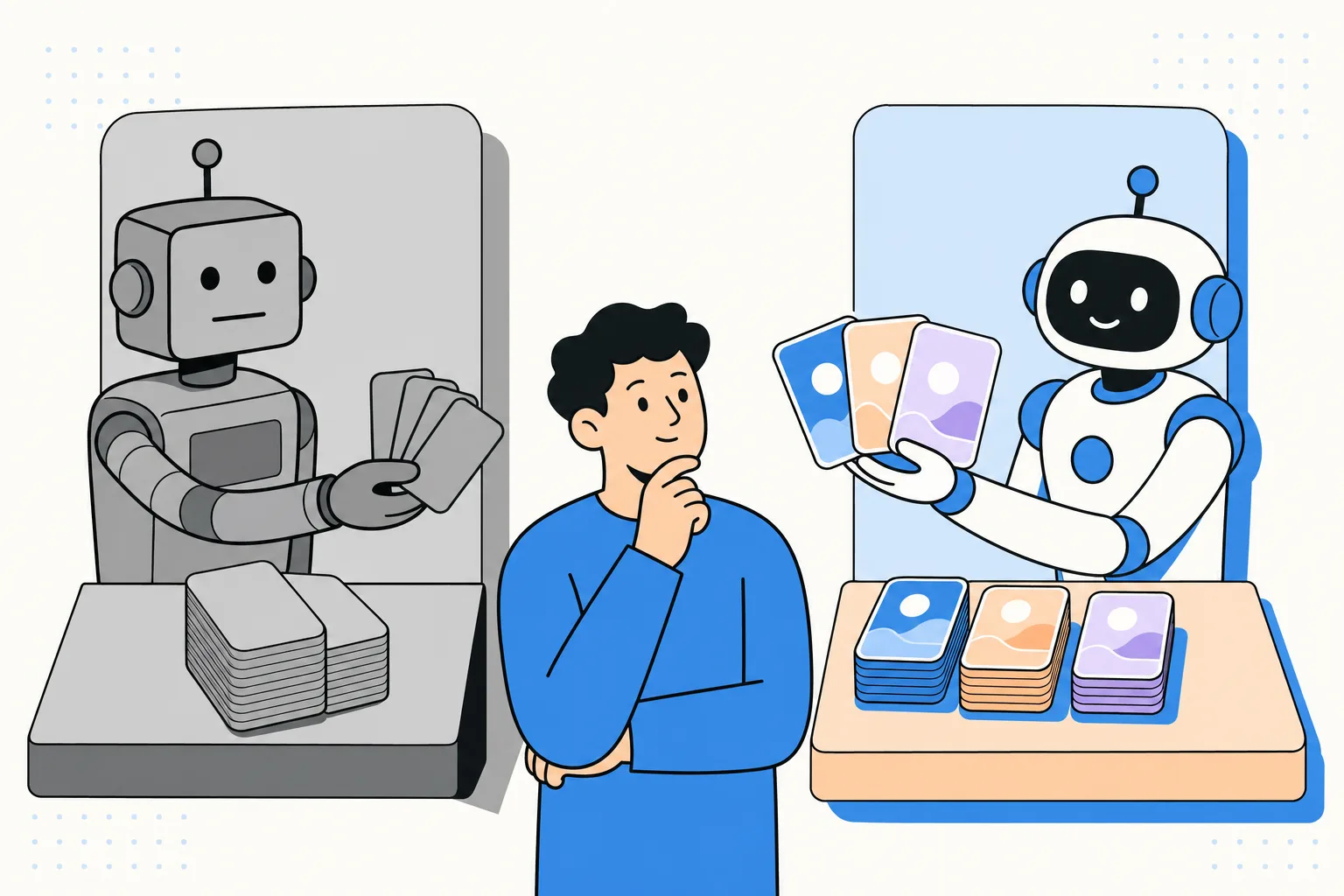
In short: generic AI doesn't know your brand, so it gives you an average of every brand. Longer prompts help a little. What works is giving it a system: your brand rules, your best examples, your templates and a check before delivery. That's a skill, and the difference in the result is huge.
Almost every team I talk to has already tried AI. They asked for a post, an ad or a presentation, and what came out was... fine. But it wasn't their brand. The wrong colors, a tone that sounds like a brochure, sentences any company could have written.
So someone on the team fixes it by hand, and in the end AI didn't save any time. It just moved the work somewhere else.
Here's why this happens and what I do to solve it.
The problem isn't the tool, it's the context
A generic AI chat knows a lot about the world, but nothing about you. It doesn't know your main button is always blue, that you never use gradients, that you talk to your clients in a casual way, or that you use one single font. Without that information, it fills the gaps with what's most common. And what's most common is exactly what makes your brand look like everyone else.
Many people try to fix it with very long prompts. They copy and paste the brand guidelines every time. It works for a while, but each person writes the prompt differently, rules get forgotten, and the result changes again.
Prompt vs. skill: the difference
Where it lives
A one-off prompt: In each person's head (or notes)
A skill trained on your brand: In one place the whole team uses
What it knows about your brand
A one-off prompt: Whatever someone remembered to write
A skill trained on your brand: Colors, fonts, tone, components, approved examples
How you use it
A one-off prompt: You need to know how to "ask well"
A skill trained on your brand: Like a chat. It asks you what it needs
Result
A one-off prompt: Changes depending on who uses it
A skill trained on your brand: Consistent, no matter who uses it
Review
A one-off prompt: Always manual
A skill trained on your brand: Checks the brand rules before giving you the piece
A skill is an AI tool, in my case Claude skills, that already has inside everything it needs to know about your company. You don't need to explain your brand. It already knows it by heart.
What a good skill has inside
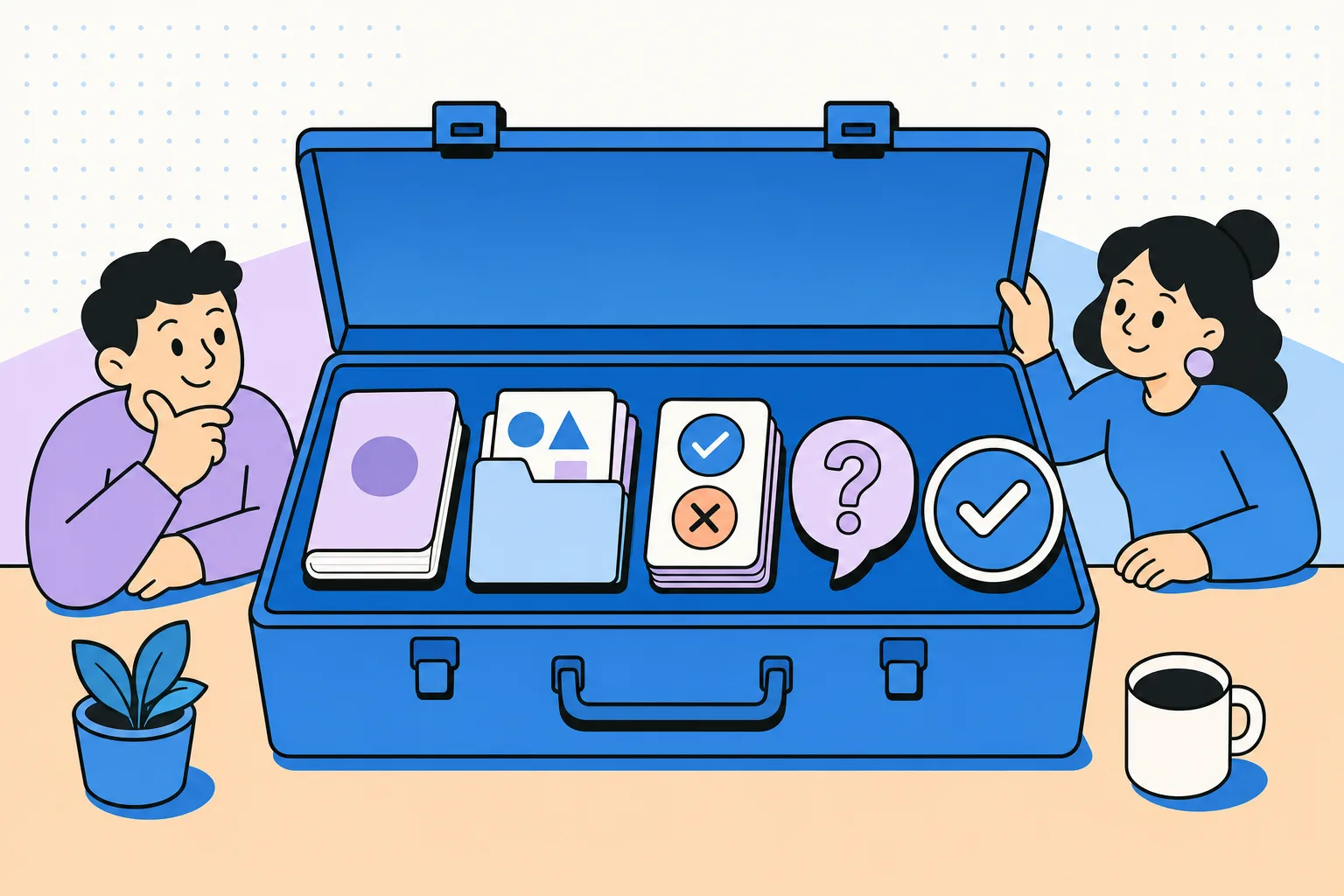
After building several for real teams, these are the five ingredients that can't be missing:
- Brand rules, written as rules. Not "we use bright colors", but "the main color is this code, the background is never pure gray, one main button per section". The more specific, the better it follows them.
- The real assets. Your logo, your icons, your illustrations and your photos. A skill that invents icons or draws its own logo will never look on brand.
- Examples of what to do and what not to do. Three approved pieces teach more than ten pages of guidelines.
- Questions before creating. A good skill doesn't guess. It asks what the piece is for, which format, and what you want to say, and it gives you options to choose from.
- A final check. Before giving you the piece, it checks the rules: the right font, contrast, no typos, nothing cut off.
All of this comes from having an organized brand first. That's why in Design Autonomy the skills are built in the third phase, never the first. If the brand is messy, the skill just produces mess faster. I explain the full process in your design team isn't slow: it's missing infrastructure.
A real example
For a SaaS team, I built a skill to make the thumbnails for their video channel. Before, every thumbnail went through design: someone asked for it, waited a couple of days, and then came the corrections.
With the skill, the content person writes the video title, the skill asks a couple of questions, and it delivers the finished thumbnail in the right size, with the brand's colors, font and style. We did the same with decks, social posts, landing pages and ads.
That's the kind of change that lets a team produce 2 to 3 times more pieces without losing consistency.
What kind of pieces a skill can produce
- Sales and investor decks
- Social media posts and carousels
- Thumbnails for videos and blogs
- Ads in all their sizes
- Landing pages
- Marketing emails
- Brand review (QA) before publishing
The rule for choosing where to start: the piece that repeats the most and waits the longest. That's the one that gives you back the most time.
What a skill doesn't do
I want to be honest about this. A skill doesn't replace a designer's judgment. It doesn't define your campaign concept or your art direction. What it does is take repetitive work off your team, so their time goes to what really needs a person thinking.
Want to know which skills your team would need? In the Design Health Check I look at which pieces your team makes most, which ones slow you down most, and tell you where to start. It's on us.
Book your Design Health Check →
Frequently asked questions
What are custom Claude skills?
They are AI tools trained on your brand, your tone and your workflows. For example, one that creates ads in your style, another that reviews the brand before publishing, and another that writes consistent emails.
Does my team need to know about AI to use them?
No. You use them like a chat. I design them for the least technical person on the team, and at the end there's training for everyone.
Are my brand files safe?
The skills are installed in your own team's accounts and stay under your control. We review this together during installation.
Can I start with just one skill?
Yes. Many teams start with the piece that hurts the most and add more later. You can request a quote for your case.
Mariana Osorio is the founder of Versa Digital and a senior visual communication designer with more than 12 years building brands, systems and digital products. Learn more about Versa.