


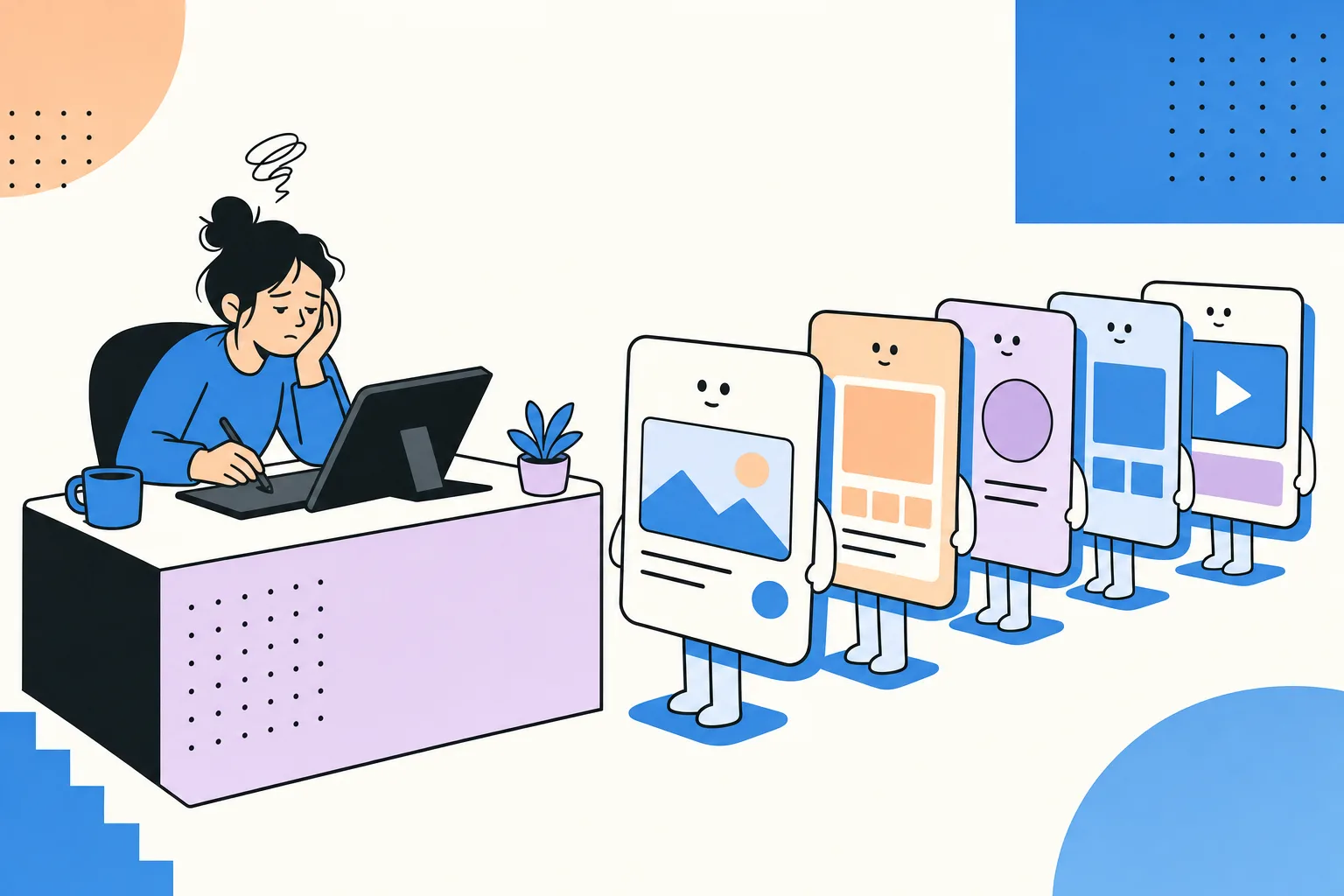
In short: when every piece in your company waits for one designer, the problem is almost never the person. It's the lack of a system: a brand without clear rules, files everywhere, and no tools that let other people produce on their own. Design Autonomy is how I fix that in four phases, so your team can create pieces in minutes and always stay on brand.
Let me start with a question. How many design pieces were left waiting in your team this week? A post, a sales deck, the campaign landing page, a thumbnail.
I've spent more than 12 years designing brands and products for startups and tech companies, and I almost always see the same thing: there is one designer, or none, and everything goes through that person. That person becomes the bottleneck. Not because they work too little, but because the system wasn't built to scale.
After all these years, my conclusion is simple: teams don't need more designers. They need better infrastructure.
4 signs that design is already your bottleneck
If you relate to at least one, keep reading.
- Marketing asks for more than you can produce. Every campaign feels like starting from zero, even with the same brand as always.
- Your brand looks different on every channel. The website, the ads, the emails and the product look like different companies.
- Nobody can find the files. The right logo is on someone's laptop, the font gets downloaded every time, and the illustrations live in folders called "final_final_v3".
- You tried AI and it doesn't sound like you. The copy is generic, the images ignore your colors, and in the end someone has to redo everything.
These are the same four signs I list in the "Sound familiar?" section of our site. It's not a coincidence: they're the problems I hear most in first calls.
What Design Autonomy is (in one sentence)
Design Autonomy is my method to help your team produce design on its own, always on brand and without losing quality.
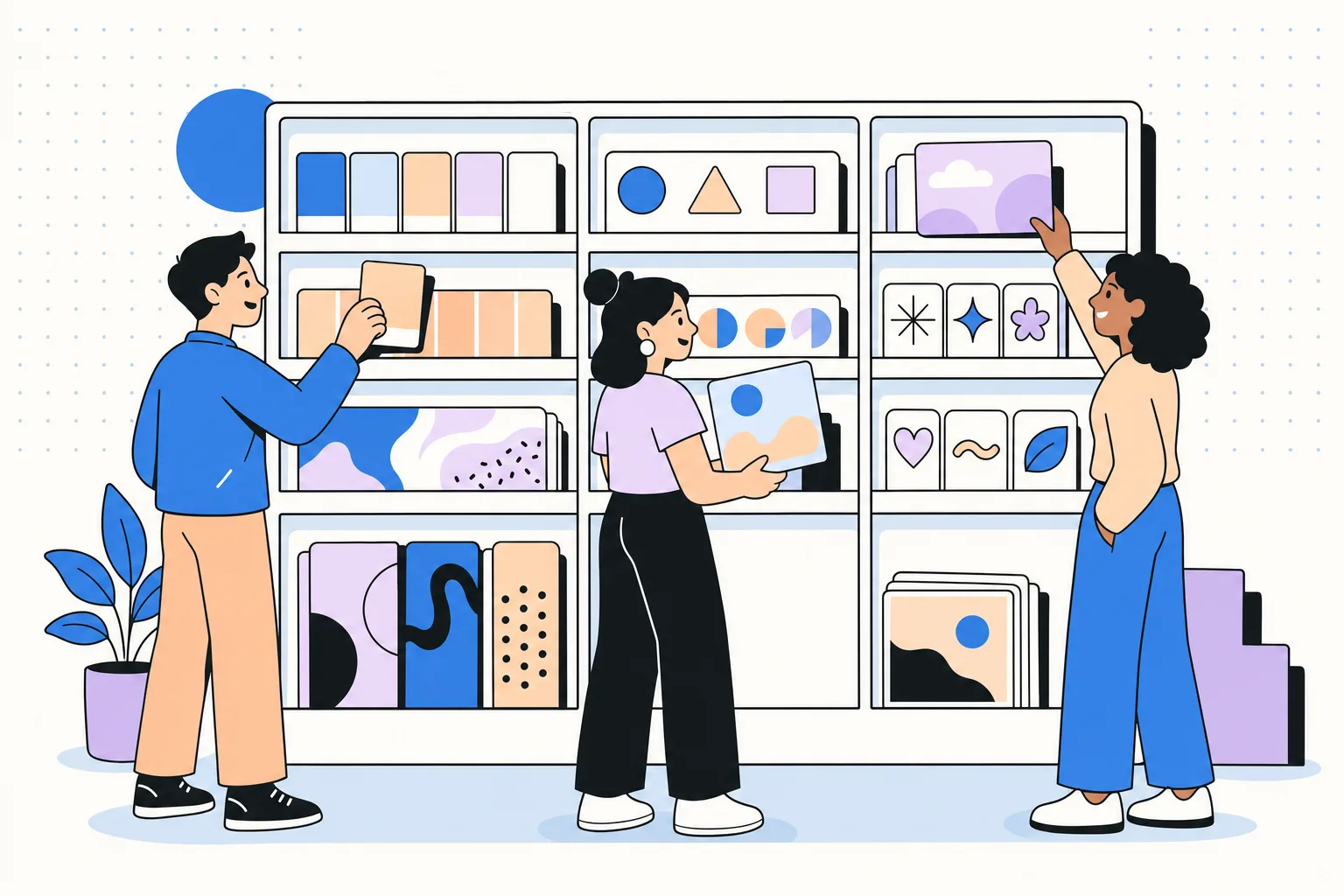
In practice, I take care of the whole process: I polish your brand, I organize your visual assets in clear libraries, and I build AI tools, Claude skills, trained on your brand and made for your company. The result is that your marketing, sales or product team can create on-brand pieces in minutes, without waiting for anyone.
You can see everything it includes on the Design Autonomy service page.
How it works: 4 phases
01 · Audit — 2 to 3 days
What I do: I review your brand, your files, your workflows and where time gets lost.
What you get: A report with what works, what's missing and quick wins.
02 · Strategy — 1 to 2 days
What I do: Together we define which pieces your team makes most, which ones slow you down most, and where to start.
What you get: A roadmap with clear priorities.
03 · Build — 2 to 4 weeks
What I do: I polish the brand, set up the Figma libraries and build the skills.
What you get: A brand system, organized libraries and ready-to-use AI tools.
04 · Enable — 1 week
What I do: I install everything, we test with real cases, and I train each person.
What you get: A team that produces on its own.
The rule behind the whole process
My rule is simple: if only I can use the tool, the tool doesn't work. That's why I design for the least technical person on the team. The skills work like a chat. You don't need to know code or prompts.
Why "hiring another designer" isn't enough
Hiring helps, of course. But if the system stays the same, in six months you have two people stuck in the bottleneck instead of one. What really changes things is taking repetitive work out of design:
- The sales deck that always has the same structure.
- The weekly social media posts.
- Thumbnails, banners and ads in all their sizes.
- The landing page for each campaign.
When the team handles that with tools that already know the brand, your designer can go back to the work that needs their judgment: concept, art direction and the pieces that matter. That's how we get 2 to 3 times more creative output with the same team.
Does this replace the designer?
No. It takes away the repetitive work so they can focus on what matters. An AI tool without a good brand system behind it just produces generic things faster. Judgment is still human. I wrote more about this in why AI doesn't sound like your brand (and how to fix it).
Where to start today (even if you don't work with me)
- List the 10 pieces your team asks for most. Count how many times each one repeats per month. That's your first opportunity.
- Put everything in one place. Logos, colors with their codes, fonts and illustrations in one shared folder with clear names.
- Write three brand rules that are not negotiable. For example: one color for the main button, never gradient backgrounds, always the same font.
- Measure how long a piece waits. From the moment someone asks for it until it's published. That number tells you what the bottleneck costs you.
Want to know if Design Autonomy is right for your team? We do a short session, the Design Health Check, on us. I review how your team works and give you a concrete recommendation, even if you decide not to work with us.
Book your Design Health Check →
Frequently asked questions
Who is Design Autonomy for?
Startups, growing SaaS companies and small agencies with 1 to 10 people in design or marketing who feel production is a bottleneck.
Do I need a design system to start?
No. Many clients arrive without one, and one of the deliverables is building it or strengthening the one they have.
How long does it take?
The full process takes 3 to 6 weeks. The first skills are working within days, and the quick wins from the Audit arrive in the first week.
How much does it cost?
It depends on the scope. After the Design Health Check I give you an exact proposal. You can also request a quote on our services page.
Do you work with companies outside Colombia?
Yes. We work 100% remotely with clients in the US, Europe and Latin America.
Mariana Osorio is the founder of Versa Digital and a senior visual communication designer with more than 12 years building brands, systems and digital products. Learn more about Versa.