


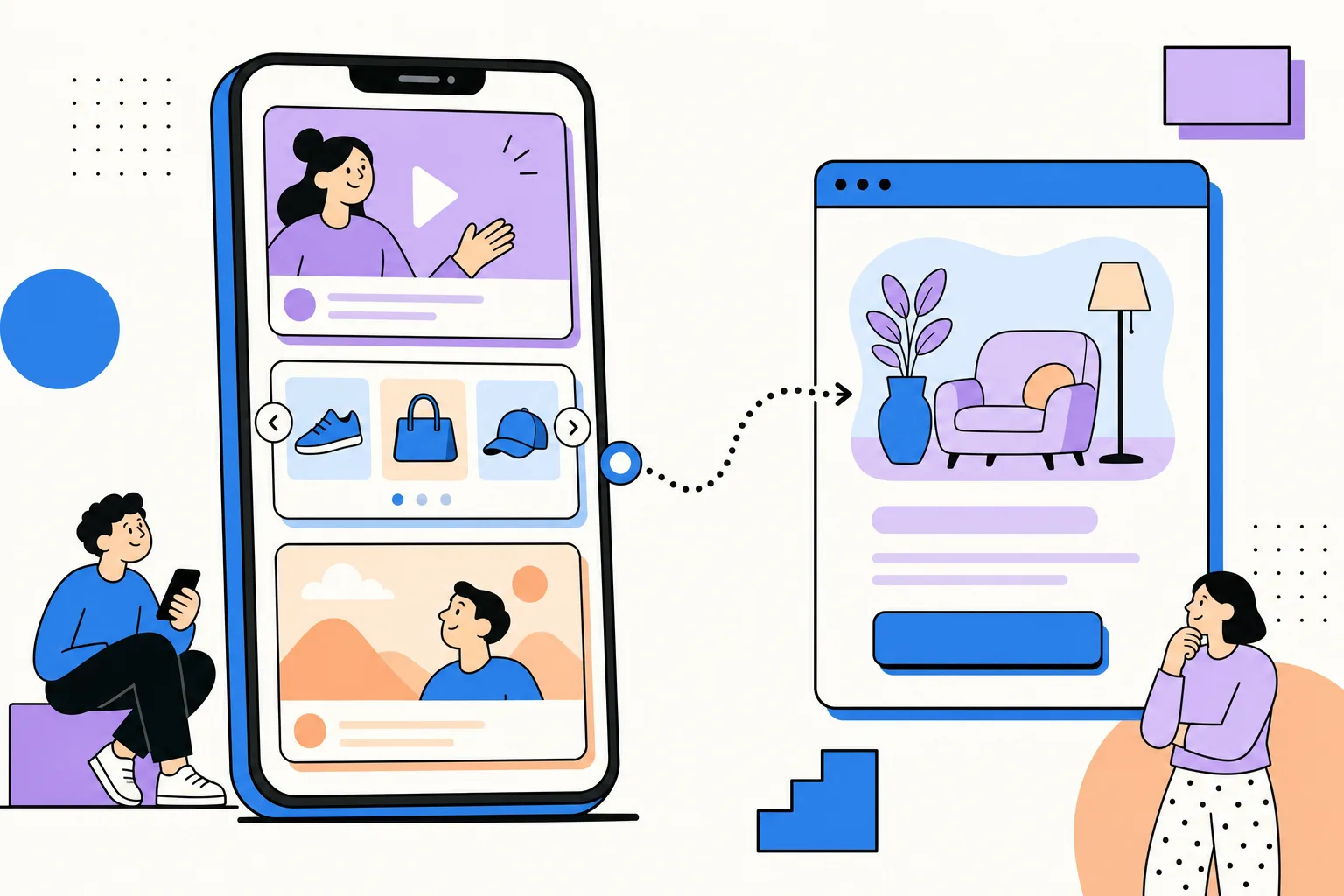
In short: today Meta decides who sees your ad by looking at the ad itself. If all your creatives look alike, you give it very little to work with. If your landing page says something different from the ad, you lose people at the last step. Before you change the audience or raise the budget, check three things: real creative variety, consistency between ad and landing page, and correct tracking.
When a campaign doesn't work, the first thing people want to change is the audience. More interests, fewer interests, another age, another city. And it's almost never that.
I see it from both sides: I design the creatives and I also manage the numbers. That combination has taught me that most campaigns that don't convert have a design problem, not a targeting problem.
1. On Meta, the creative is now the targeting
A few years ago, you told Meta who to show your ad to. Today it works the other way around: the system looks at your image, your video and your text, and uses that to decide who the right person is. That's why broad targeting works better and better, as long as the creative is clear.
This has a consequence few people think about: if you upload ten ads that are the same photo with different text, Meta sees them as almost the same ad. It groups them and gives little delivery to the rest. You're not testing ten ideas, you're testing one.
What "real variety" means
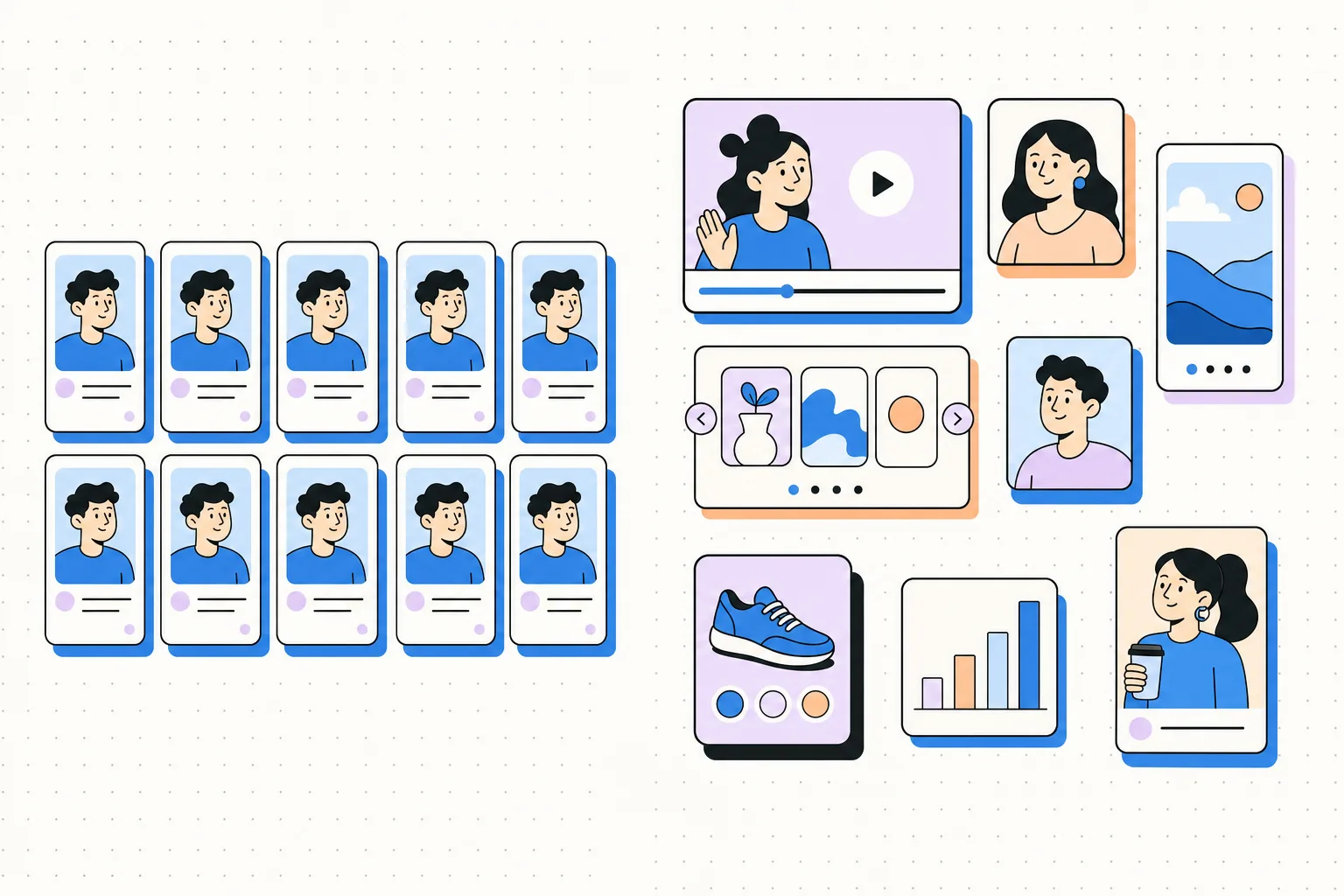
Real variety means changing the concept, not the button color. For example:
- Different format: short video, static image, carousel.
- Different angle: the customer's pain, the result, social proof, a comparison, how it works.
- Different presenter: someone talking to camera, product only, text only.
As a practical rule, aim for about 10 truly different creatives in an active account. And you don't need all of them running: what has worked for me is keeping a few winning ads active and having backups paused, ready for when the first ones get tired.
2. Design for the first second, with no sound
Most people see your ad on their phone, scrolling fast and often with the sound off. That changes how you design:
- The main message has to be clear in the first second and a half.
- Everything has to work without audio: captions and on-screen text.
- Important things go in the center of the frame, away from the edges where Instagram puts buttons and names.
- Vertical format (9:16) for Reels and Stories, and 4:5 or 1:1 for the feed.
- Always on brand: your colors, your font, your tone. An ad that looks like another company doesn't build recognition, even if it gets clicks.
Keeping all of this consistent across dozens of pieces is exactly where many teams get stuck. It's one of the problems I solve with skills trained on your brand, which produce ads in all their sizes without breaking the style.
3. The landing page has to continue the conversation
This is the mistake I see most. The ad promises one thing, the person clicks and lands on the homepage, with another message, another color and ten different options. They get lost and leave.
A good landing page for ads:
- Repeats the ad's promise in the headline, with almost the same words.
- Looks like the ad: same colors, same image or style.
- Has one main action. One button, one goal.
- Loads fast on mobile. If it's slow, the click you paid for is gone.
- Answers questions before they come up: price or range, how it works, FAQ.
That's why I like the same person to think about the ad and the landing page. If you need a page like this, in Web Development we build high-impact landing pages in Webflow that your team can clone and edit for each campaign, without depending on anyone.
4. Before optimizing, check that you're measuring correctly
If the pixel isn't set up correctly, Meta is optimizing blind. Before drawing conclusions, check:
- That the Meta pixel records the events you care about: purchase, sign-up, contact.
- That the Conversions API is active, so you don't lose data to blockers and privacy changes.
- That you're not counting the same event twice.
5. Three budget rules that save you money
Give each ad set at least 5 times what one conversion costs you
Why: With less, Meta doesn't get enough data to learn, and the campaign never stabilizes.
Don't touch the campaign while it's learning
Why: Every big change restarts the learning. Wait for data before moving things.
If an ad costs more than 3 times your target, turn it off
Why: It's a clear sign that creative isn't connecting. Move the budget to the ones that are.
Quick checklist before raising the budget
- Do I have at least 10 creatives with different concepts, not just variations?
- Is the message clear in the first second, with no sound?
- Do all the ads look like my brand?
- Does the landing page repeat the ad's promise and have one action?
- Are the pixel and the Conversions API measuring correctly?
- Does each ad set have enough budget to learn?
If you answered "no" to two or more, the problem isn't the audience.
Want me to review your campaigns? In Meta Ads I design the creatives and manage the campaign with the same mind: strategy, pixel and Conversions API, creatives for each format, A/B tests and clear monthly reports.
Get a quote for your campaign →
Frequently asked questions
How many ads should I have active on Meta?
Variety matters more than quantity. Ideally you have around 10 truly different concepts in the account, with a few winners active and others paused as backups.
How often should I change the creatives?
When you see the cost per result going up and the frequency going up too, the ad is getting tired. That's when a backup comes in. There's no fixed number of days.
Can I send the ads to my homepage?
You can, but a dedicated landing page that continues the ad's message and has one action almost always converts better.
Do you design the creatives and also manage the ads?
Yes. That's the advantage: the same person who thinks about the creatives reads the numbers, so every design decision is based on data.
Mariana Osorio is the founder of Versa Digital and a senior visual communication designer with more than 12 years building brands, systems and digital products. Learn more about Versa.